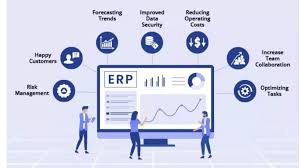
The shift toward remote and hybrid work models has transformed how organizations operate. Companies are no longer limited by geography, and employees expect flexibility without sacrificing productivity. In this evolving landscape, Enterprise Resource Planning (ERP) systems have become essential tools for maintaining coordination, transparency, and efficiency across distributed teams.
Modern ERP solutions—especially cloud-based platforms like SAP, Oracle, and Microsoft—play a critical role in enabling seamless collaboration and real-time access to business data, regardless of location.
1. Centralized Access to Real-Time Data
One of the biggest challenges of remote work is ensuring that all employees have access to accurate and up-to-date information. ERP systems centralize data across departments—finance, HR, procurement, operations, and sales—into a single integrated platform.
With cloud ERP:
Employees can securely log in from anywhere.
Teams access real-time dashboards and reports.
Decision-makers get instant visibility into performance metrics.
This eliminates dependency on physical files or office-based servers and reduces miscommunication caused by outdated information.
2. Enhanced Collaboration Across Departments
Remote and hybrid teams require strong digital collaboration tools. ERP systems integrate multiple departments into one system, ensuring everyone works with the same data.
For example:
Finance teams can instantly review sales data.
HR can manage remote employee records and payroll.
Supply chain managers can monitor inventory in real time.
Many ERP platforms also integrate with communication tools like Microsoft Teams or Slack, improving coordination without switching between multiple systems.
3. Automated Workflows and Approvals
In traditional office settings, approvals often happen through face-to-face meetings or physical signatures. In remote environments, this can slow operations.
ERP systems streamline workflows by:
Automating approval processes
Enabling digital document management
Sending real-time notifications for pending tasks
This ensures business continuity even when teams are working across different time zones.
4. Secure Remote Access and Data Protection
Security is a top concern in remote work environments. Modern ERP systems provide:
Role-based access control
Multi-factor authentication
Data encryption
Audit trails
Cloud providers invest heavily in cybersecurity, ensuring that sensitive company data remains protected even when accessed from multiple locations.
5. Improved HR and Workforce Management
Remote and hybrid work models require flexible workforce management. ERP systems support HR departments by enabling:
Digital onboarding processes
Online attendance and time tracking
Performance monitoring
Payroll automation
Employee self-service portals
Managers can track productivity and employee engagement without micromanaging, while employees can access payslips, request leave, and update personal information independently.
6. Better Financial Visibility and Control
Financial control becomes more complex when operations are distributed. ERP systems help by providing:
Real-time financial reporting
Budget tracking
Expense management
Automated invoicing
Executives can monitor cash flow and profitability from anywhere, enabling faster and more informed decision-making.
7. Scalability and Flexibility
Remote work often leads companies to expand beyond traditional office boundaries. Cloud ERP systems allow organizations to:
Add new users easily
Support global operations
Scale infrastructure without heavy IT investments
This flexibility is essential for growing businesses adapting to hybrid workforce models.
8. Supporting Business Continuity
ERP systems help organizations remain resilient during disruptions—whether caused by global events, natural disasters, or workforce changes. Because cloud-based ERP systems are not tied to a single physical office, businesses can maintain operations even when offices are closed.
This level of resilience has made ERP a core component of modern digital strategy.