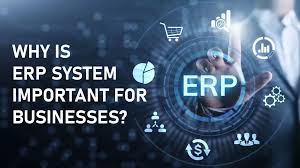
In today’s fast-changing business landscape, digital transformation is no longer optional—it is a strategic necessity. Organizations across industries are leveraging technology to streamline operations, enhance customer experiences, and gain competitive advantages. At the center of this transformation lies Enterprise Resource Planning (ERP) software, which plays a critical role in integrating processes, data, and people across the organization.
Understanding Digital Transformation
Digital transformation refers to the integration of digital technologies into all areas of a business, fundamentally changing how it operates and delivers value to customers. It involves more than adopting new tools; it requires rethinking processes, culture, and business models.
ERP software supports this transformation by serving as the backbone of digital infrastructure. It connects departments such as finance, human resources, supply chain, procurement, sales, and manufacturing into a single unified system.
ERP as the Core Business Platform
Modern ERP systems such as SAP S/4HANA, Oracle NetSuite, and Microsoft Dynamics 365 provide centralized data management and real-time visibility across operations.
By consolidating data into a single source of truth, ERP enables:
Improved decision-making through real-time analytics
Reduced data silos between departments
Greater operational transparency
Standardized and automated workflows
Without a strong ERP foundation, digital transformation initiatives often become fragmented and inefficient.
Enabling Process Automation
One of the key drivers of digital transformation is automation. ERP systems automate repetitive and manual tasks such as:
Invoice processing
Payroll management
Inventory tracking
Procurement approvals
Order management
Automation reduces human error, increases speed, and allows employees to focus on strategic tasks rather than administrative work.
Supporting Data-Driven Decision Making
Digital transformation relies heavily on data. ERP systems collect and process vast amounts of structured data across the organization. With built-in analytics and reporting tools, businesses can:
Monitor key performance indicators (KPIs)
Forecast demand and revenue
Analyze financial performance
Optimize supply chain operations
Advanced ERP platforms integrate with business intelligence (BI) tools and artificial intelligence (AI) to generate predictive insights that guide strategic planning.
Enhancing Customer Experience
Customer expectations continue to evolve. ERP systems integrate with CRM platforms and e-commerce systems to provide a unified customer view. This enables:
Faster order processing
Accurate inventory availability
Personalized customer interactions
Improved after-sales service
By aligning front-office and back-office processes, ERP ensures seamless customer experiences.
Facilitating Scalability and Growth
As companies grow, their systems must scale accordingly. Cloud-based ERP solutions offer flexibility, remote accessibility, and automatic updates. This supports:
Multi-location operations
International expansion
Compliance with local regulations
Remote and hybrid workforce models
Scalable ERP platforms ensure that digital transformation efforts remain sustainable in the long term.
Improving Compliance and Risk Management
Regulatory compliance and data security are essential components of digital transformation. ERP systems help organizations:
Maintain accurate financial records
Track audit trails
Enforce internal controls
Ensure data security standards
This reduces operational risks and strengthens governance frameworks.
Challenges in ERP-Driven Digital Transformation
While ERP plays a vital role, implementation is not without challenges. Common issues include:
High initial investment
Resistance to organizational change
Data migration complexities
Customization vs standardization decisions
Successful digital transformation requires strong leadership, change management strategies, and clear alignment between technology and business objectives.