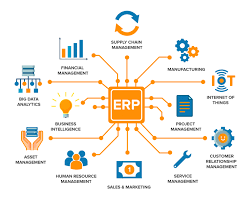
Implementing Enterprise Resource Planning (ERP) software is a major investment for any organization. While ERP systems can significantly improve efficiency, visibility, and decision-making, many businesses underestimate the true cost of implementation.
So, how much does ERP software implementation really cost? The answer depends on company size, deployment type, customization level, and vendor selection. In this article, we break down the key cost components to help you plan your ERP budget effectively.
1. Software Licensing or Subscription Costs
The first and most obvious cost is the ERP software itself.
🔹 On-Premise ERP
Traditional ERP systems such as SAP ERP or Oracle ERP typically require:
One-time license fees
Annual maintenance fees (usually 15–22% of license cost)
Costs can range from $1,000 to $4,000 per user, depending on features and modules.
🔹 Cloud-Based ERP
Cloud ERP solutions like Oracle NetSuite or Microsoft Dynamics 365 operate on a subscription model:
Monthly or annual payment per user
Lower upfront cost
Automatic updates included
Pricing typically ranges from $50 to $300 per user per month.
2. Implementation and Consulting Fees
Implementation is often the most expensive part of an ERP project.
This includes:
System configuration
Business process mapping
Data migration
Testing
Project management
Consulting fees can range from $25,000 for small businesses to $500,000+ for large enterprises.
In many cases, implementation costs are 1–3 times the software cost.
3. Customization and Integration Costs
Every company has unique workflows. Customization may include:
Custom dashboards
Specialized reports
Industry-specific modules
Third-party integrations (CRM, eCommerce, payroll systems)
Highly customized systems cost more to build and maintain. Integration with other platforms can add $5,000 to $50,000 or more depending on complexity.
4. Hardware and Infrastructure (For On-Premise ERP)
If choosing an on-premise system, additional infrastructure costs may include:
Servers
Database systems
Security solutions
Backup systems
IT staff
This can add $10,000 to $100,000+ to your total investment.
Cloud ERP eliminates most of these infrastructure expenses.
5. Training and Change Management
ERP success depends heavily on user adoption.
Training costs may include:
On-site or virtual training sessions
Training materials
Employee time spent learning the system
Budget around $1,000 to $3,000 per user for proper training and onboarding.
6. Ongoing Maintenance and Support
ERP implementation is not a one-time cost.
Ongoing expenses include:
Software updates
Technical support
System upgrades
Additional user licenses
Continuous improvements
For on-premise systems, annual maintenance usually costs 15–22% of license fees.
For cloud ERP, maintenance is typically included in subscription fees.
7. Hidden Costs to Consider
Many businesses overlook indirect expenses such as:
Temporary productivity decline during transition
Internal project team allocation
Data cleansing efforts
Business process redesign
Unexpected customization requests
These hidden costs can significantly impact the total project budget.
Total Estimated ERP Implementation Cost
Here’s a rough estimate by company size:
| Company Size | Estimated Total Cost |
|---|---|
| Small Business (10–50 users) | $20,000 – $150,000 |
| Mid-Sized Company (50–250 users) | $150,000 – $750,000 |
| Large Enterprise (250+ users) | $750,000 – Several million dollars |
Keep in mind: every ERP project is unique.
How to Control ERP Implementation Costs
To avoid budget overruns:
✅ Clearly define business requirements
✅ Limit unnecessary customization
✅ Choose the right deployment model (cloud vs on-premise)
✅ Work with experienced consultants
✅ Invest in proper training
✅ Plan for long-term scalability
Is ERP Worth the Investment?
Although ERP implementation can be expensive, the return on investment (ROI) can be substantial:
Improved operational efficiency
Reduced manual work
Better inventory control
Real-time financial visibility
Stronger data-driven decision making
When implemented correctly, ERP software becomes a strategic asset rather than just an IT expense.